
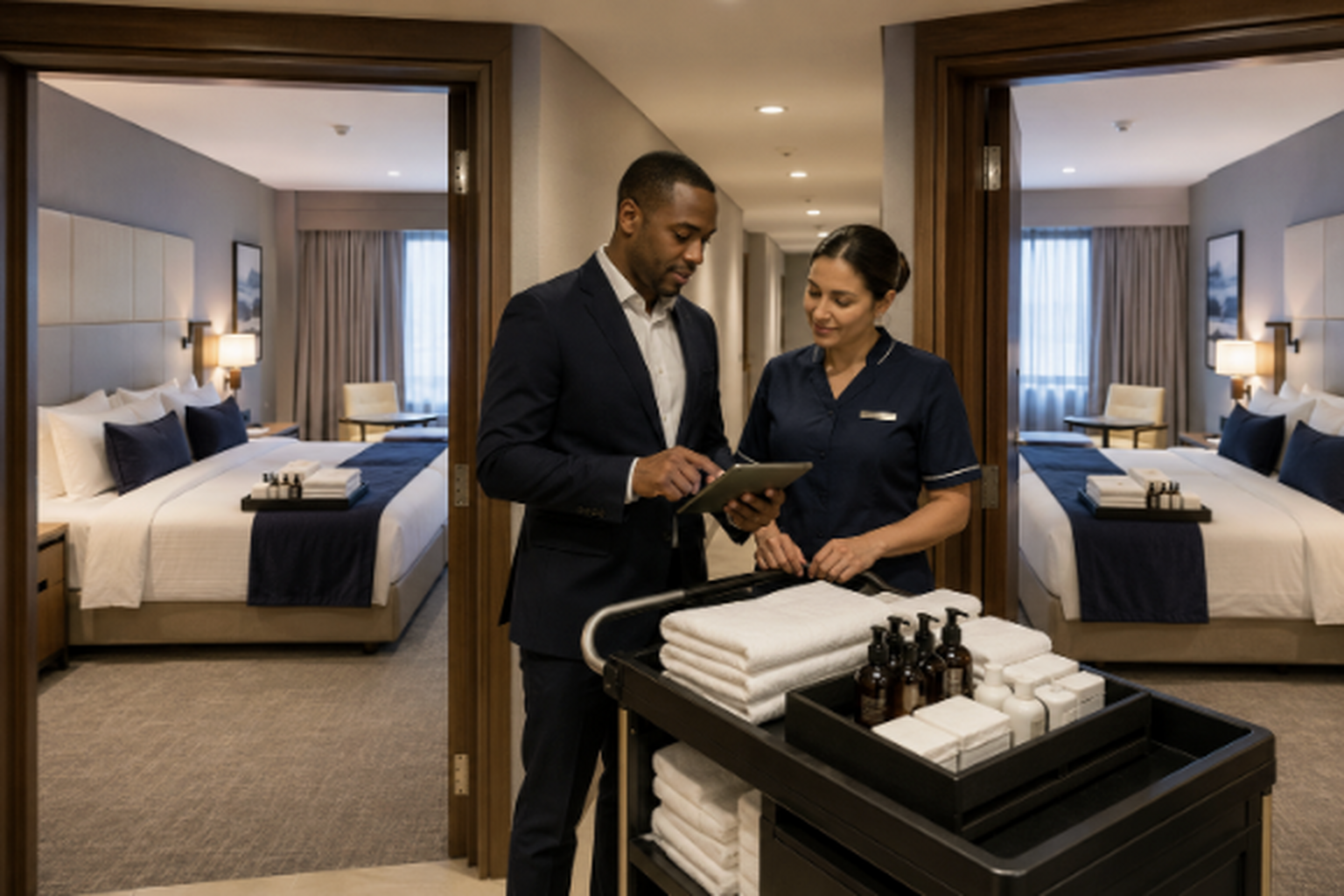
Guests expect a hotel group to deliver a recognisable standard across every property. Room design may vary by destination, but the quality of linen, amenities and service essentials should remain dependable.
Consistency is difficult to maintain when properties purchase independently, use different specifications or rely on unrelated suppliers. These differences can affect guest expectations, operating costs and the strength of the group’s brand.
A coordinated purchasing model helps hotel groups establish common standards while allowing individual properties to respond to local requirements.
Define the guest experience
Consistency begins with a clear understanding of the experience the group wants to provide. This should translate into practical product standards for bedrooms, bathrooms, housekeeping and food service areas.
Specifications may cover:
- Linen materials and sizes
- Pillow and duvet requirements
- Towel weight and construction
- Guest amenity ranges
- In-room accessories
- Packaging and presentation
- Approved colours and finishes
Each standard should be detailed enough to guide purchasing without creating unnecessary complexity.

Create an approved product range
An approved product list helps properties purchase suitable items without repeating the full sourcing process. It also reduces the risk of visually similar products performing differently between locations.
Products should be evaluated for comfort, durability, ease of maintenance and replacement availability. Housekeeping and operational teams should contribute to the selection because they understand how products perform during daily use.
The range can include approved alternatives for situations where the preferred item is unavailable. Alternatives should meet the same essential performance and presentation requirements.
“A consistent guest experience is created when every property understands the standard and has reliable access to the products required to maintain it.”
Coordinate purchasing centrally
Central purchasing provides greater visibility of group-wide demand and expenditure. It can help the organisation combine volumes, standardise specifications and negotiate consistent commercial terms.
Central coordination does not require every delivery to pass through one warehouse. Products may still be delivered directly to individual properties while pricing, specifications and supplier performance are managed at group level.
Properties should follow a clear ordering process that identifies approved products, authorised buyers and procedures for urgent requirements.
Allow controlled local flexibility
Not every hotel operates under identical conditions. Climate, guest profile, property size and laundry arrangements may require some variation.
A resort in a warm region may need different bedding from a hotel in a colder location. A remote lodge may also need additional stock because replenishment takes longer.
The group can define which standards are mandatory and where local adaptation is permitted. Any exception should be documented and approved so that flexibility does not lead to uncontrolled product variation.
Plan stock and replenishment
Consistent standards depend on consistent availability. Properties should maintain stock levels that reflect occupancy, laundry cycles, replacement rates and supplier lead times.
Group forecasting can give suppliers a clearer view of expected demand. This may support production planning, scheduled deliveries and more reliable stock availability.
Long-lead products should be ordered in advance, particularly before peak periods, renovations or new property openings. Approved alternatives can provide additional protection when the standard product is temporarily unavailable.
Monitor quality across properties
An approved specification does not guarantee that every delivery will remain consistent. Properties should check incoming products and report differences in quality, sizing, packaging or performance.
Useful measures include:
- Product replacement rates
- Guest and staff feedback
- Laundry performance
- Delivery reliability
- Frequency of shortages
- Product defects or returns
Central reporting helps the group identify whether a problem is limited to one property or reflects a wider supplier issue.
Strengthen supplier accountability
Suppliers should understand the group’s specifications, delivery locations and service expectations. Clear agreements can define pricing, lead times, packaging and procedures for resolving problems.
Performance should be reviewed regularly. A supplier supporting several properties must provide consistent quality and communication across the group, not only at the largest locations.
Where several product categories are coordinated through one supply partner, the group may also reduce administrative work and simplify delivery reporting. Important categories should still have contingency options to prevent excessive dependence on one source.
Building consistency across a growing group
Consistency allows hotel groups to protect their brand while making purchasing and operations easier to manage. The strongest approach combines common product standards, central oversight and practical flexibility for individual properties.
GANS Signature supports hotels, lodges and hospitality groups with linen, bedding, amenities and related operational supplies. GANS South Africa can coordinate defined product ranges, multi-property requirements and delivery planning through one managed supply relationship.
By connecting brand expectations with product performance and dependable replenishment, hospitality groups can provide a more consistent experience across every property.